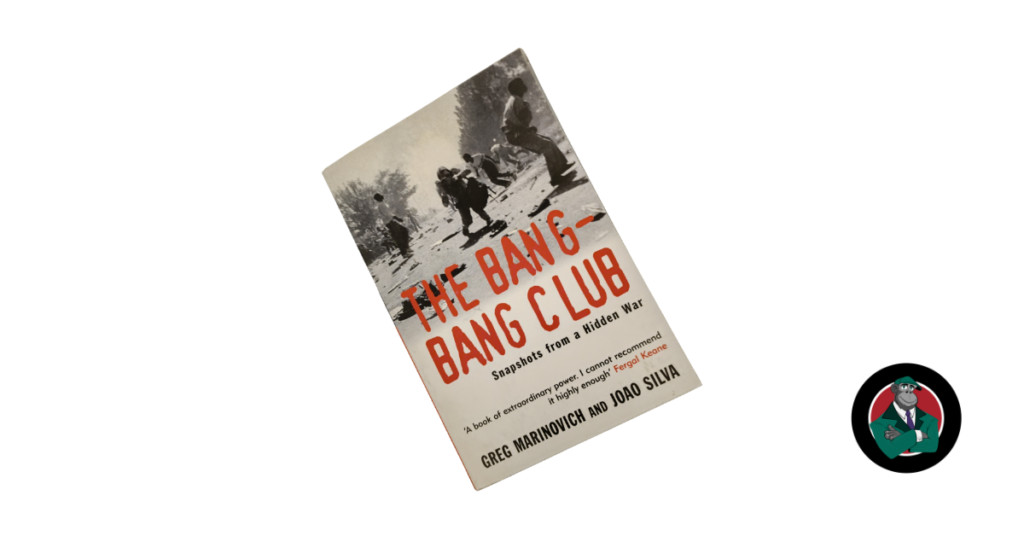
This is a powerful book. It chronicles a time in the lives of a group of photojournalists and the period they were capturing on film: South Africa during the transition from Apartheid to democracy in the early 1990’s. For those who are fearful of words: the book has pictures but they’re not so fun to look at. They contain too many words. They render the viewer speechless. And then they set the mind and heart racing.
The book does a pretty good job of doing that too: raising your heart rate and blood pressure. You’re dropped into a first-person perspective of what it meant to be on the frontlines during what many people from South Africa call the ‘Hostel wars’. When Inkhata cut their way to the negotiating table and onto the ballot. It was a war. Nobody’s hands were clean. Everybody’s soul was cleaved with a new mark as each violent event unfolded.
This included the photographers themselves. The stories they covered were atrocious. Horrors left their mark in their minds and hearts and probably every fibre of their being. To cope each chose their own path. Some survived, some didn’t. It’s a good book for budding journalists to read if they envision themselves reporting on war. It tears through the daily bullshit of life and highlights a moment in time when death was the order of the day. That dark end that awaits us all. It visited thousands in South Africa during that turbulent time.
The Bang Bang Club is written simply and bluntly. Flowery language would only undermine the power of the shared stories. The pain can be felt through the pages as these mad men consistently lived at the edge of life and death, good and evil. Greg Marinovich, Joao Silva, Ken Oostebrook and Kevin Carter are incredible characters. That their story is real and true and captured on their own film rolls makes it all the more authoritative. They were there. They know what happened. They took pictures to prove it.
In a time when truth was relative to who you called your relatives, having concrete evidence of the truth was vital for the social fabric of South Africa to sustain itself through the dismantling of Apartheid. The first time I heard about this book was when the movie came out. I was still in film school and watched the movie before I read the book. The first time I saw the book was when a relative showed it to me as part of her university journalism curriculum. I’m not sure if it’s still prescribed but it probably should be.
I cannot recommend this book enough. It’s a fair evaluation of humanity and humans can only benefit from engaging with it. Reading this book is an experience that requires growth.

