
In recent decades the word ‘epic’ has been co-opted for colloquial use and applied in areas where the subject is actually rather mundane and banal. But when applied to certain writings it is completely justified. The works of Homer are often called epic. Rightly so. They tell tales of incredible stories that span years, lifetimes and generations. Characters come to life that are memorable enough to become immortal and have a cultural impact for generations. Who isn’t familiar with Achilies? Even if it is only from the film Troy.
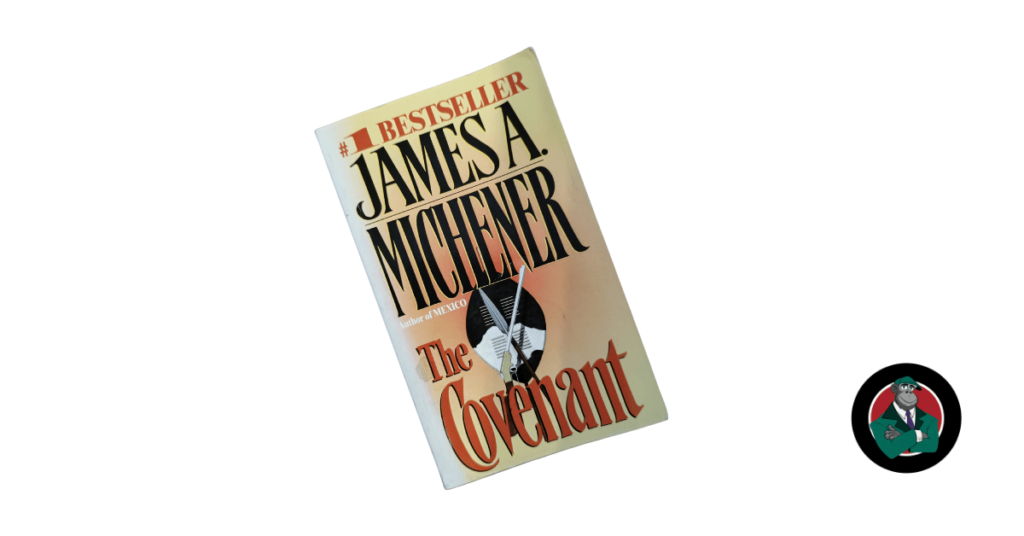
James A Michener’s The Covenant is undoubtedly of epic proportions. Beginning back in times before time was measured, in a land as unique and mystical as any on Earth. Based in South Africa the narrative follows different fictional characters as they and their descendants traverse time and space on the Southern tip of the African continent. From the time Khoi and San freely roamed the land to the fateful year of 1652 when the VOC decided to setup a pitstop (not a colony of civilisation), through the foundational years of the 1700’s and the tumultuous 1800’s, up until the Anglo-Boer war and the building of the edifice and structures of Apartheid. It is a yarn that winds through the entire history of Southern Africa and parts of Europe, America and Asia.
In each chapter characters find themselves in a unique time period in a unique place, interacting with a few people who would become famous and infamous in the history of South Africa and the whole world. From Jan van Riebeeck who was deemed too ugly to be used on currency hundreds of years later, to Shaka the psychopath and Mzilikazi the killer to CJ Rhodes that most British genocidaire, famous faces from the past make an appearance and add a vigour to the story but also lend it authenticity.
It’s important to be wary of the line between fact and fiction but this book is so thoroughly researched that even if you may be referencing the name of a person who never existed, their story is so historically accurate that it can be seen in the true stories of a thousand other people. Whether they be Afrikaans, English, Zulu, Xhosa, white, black, coloured, Indian…all those designations that were so carefully charted out by the government many years later. Understanding how the South African government reached the horrific conclusion to societal organisation known as Apartheid becomes clear when you trace the ideas of their ancestors to the beginning of their existence on the African continent.
The paths that lead from a noble past to the most ignoble present of the 1980s can be traced through this book and the characters, who are written with enough humanity to empathise with them and give life to the actual events that left indelible marks on the past of many people and nations. The Battle of Spion Kop will forever be associated with Liverpool football club’s famous stand. Churchill and Ghandi were at the same battle on that hill down in South Africa. The company founded by Rhodes would commit genocide to form countries and a whole market for essentially worthless rocks sold with magnificent marketing that convinced consumers just how many of their pay checks they needed to buy one. Engagement rings are now a worldwide phenomenon.
The formations of cultures that were impacted by larger than life personalities becomes clear as Michener walks the reader through the history of that person’s life and circumstance that led them to become the leader they were. Ugly old Oom Paul is a good example. Shaka Zulu another. The places of the country shine as much through the story. The great Kalahari, the oceans Atlantic and Indian, the mountains and plains and animals of the land all play a part in this story as they do in the story of every person who lives there now.
With vivid descriptions the author enlivens scenes of South Africa’s natural beauty along with the love and violence that can occur between people on an interpersonal level. Without the stories of personal experience the book would be flat, with them it extends to a healthy 1200+ pages. It’s a great read for anyone from Earth but particularly for those from the Southern tip of Africa. I was told by the person who lent me their copy that it should have been prescribed reading at school for South African kids. I know I would never have made it through that many pages in a year back then. I was simply too delinquent. But having read the book my understanding of South Africa is unquestionably enhanced.
The book explains the etiology of SA, but it also begs some interesting questions. One of which is: what would have happened if a person of colour was allowed onto a touring cricket team way back when? In today’s world we see a Springbok rugby team that represents the people of South Africa more than ever before. They are also arguably the most successful Springbok team of all time (so far). The path of transformation to improve diversity clearly empowered the team but also connected millions of people through their success. What if that process could have happened in the last century rather than now? What strides could South African society have made if it hadn’t been shackled by the bounds of bigoted and uneducated thinking? But that all goes with the history of the land and its people. Much of which is covered in this book.
Although certain interactions and characters are undoubtedly works of fiction, the book as a whole provides a fair journey to explain how and why South Africa is the way it is. In a way that is accessible and capable of capturing the imagination while stirring the emotions but not through spectacle, only vivid description of the best known historical facts. Anyone who wishes to understand South Africa would be served well by reading this book.

