
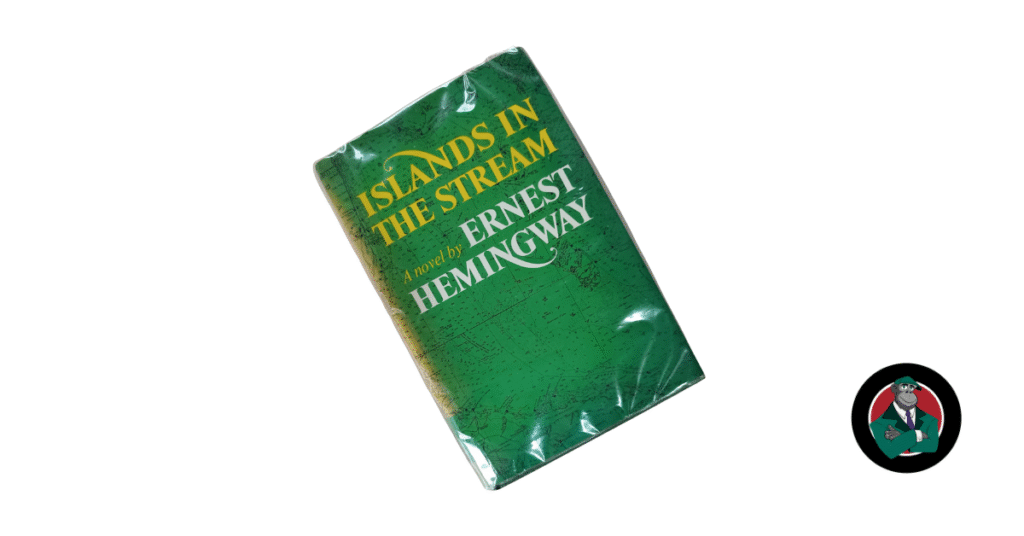
Cuba seems like a wonderful place. At least Hemingway makes it seem that way. His characters living a lifestyle similar to what he knew. From what I know. And imagine. But apart from the gorgeous geography, this book, as with most of this author’s work, is filled with heart. It’s the first book published after he cracked and croaked. Split into 3 clear parts that string together a time in the life of a man.
This man is an artist, painter, and fairly famous and successful judging by some of the company he keeps. At least in the beginning of the book. The warmth of sun covered sand and clear blue seas present themselves as visceral experiences with the way Hemingway writes: simply and direct. The drinks and food can be felt and smelled. The lives of young boys living on an island of adventure with their divorced dad and his mad friends sounds simply superb. Reminiscent for me of a time I spent in a similar situation in Tanzania. Even when there are sharks (because there are also sub machine guns) the adventure doesn’t end. Joy jumps out of the page like some kinds of fish out of water.
But then old Ernie starts to dig away. With death and drink and war as narrative companions he walks us into the theatre of World War II. There’s a brief stop at a bar where some interactions happen that give the reader a finer sense of the characters to come and how they act. It’s fine reading for my tastes although it may not be for everyone. Prostitutes and foul bar language can be irksome to some. I find it entertaining because it is fiction. But also because Hemingway writes with such lived-in truth that even the bar scenes feel like memories borrowed from someone who was truly there.
By the final part of the book, we’re no longer sun-drunk on Cuban shores or tucked away with boys and dogs and island dreams. We’re out at sea again, but now with heavier hearts and heavier guns. Hunting enemy submarines becomes a mission cloaked in both duty and something more personal. The painter becomes the soldier, and the grief that had been hiding in the tide finally rises to the surface.
What really hits is how quiet some of this final stretch is. For a war story, there’s a lot of silence. Space to think. To feel. And that’s where Hemingway sneaks up on you. The man who once swam with his sons and joked with barflies is now steeped in loss and memory. And it hurts. Because it’s honest.
The final few pages can knock the wind out of you. Not with any plot twist or action, but with the simple weight of emotional truth. Regret, love, loyalty, sorrow. All of it carried across the waves in plain language that never begs for attention, just tells the truth.
Islands in the Stream might not be Hemingway’s most famous book, but it might be his most human. It’s rough in patches, and not every section will sing for every reader. But taken as a whole, it’s a beautiful, broken, and quietly powerful journey. A painting of a life in bold strokes and faded colours.
Like the sea, it can soothe or crush. Sometimes in the same chapter. But it’s always moving, and always real.

