
There’s something about an autobiography that is told in truth. It gives the narrative details a visceral viscosity that sticks in the mind and coats it with memories from another’s life into your own. This is the primary way that this primate has come to understand humans and their history (barring sitting in bars and collecting the stories of individuals by doing that activity so vital but so rare in a world where everyone can publish their thoughts on social media: listening).
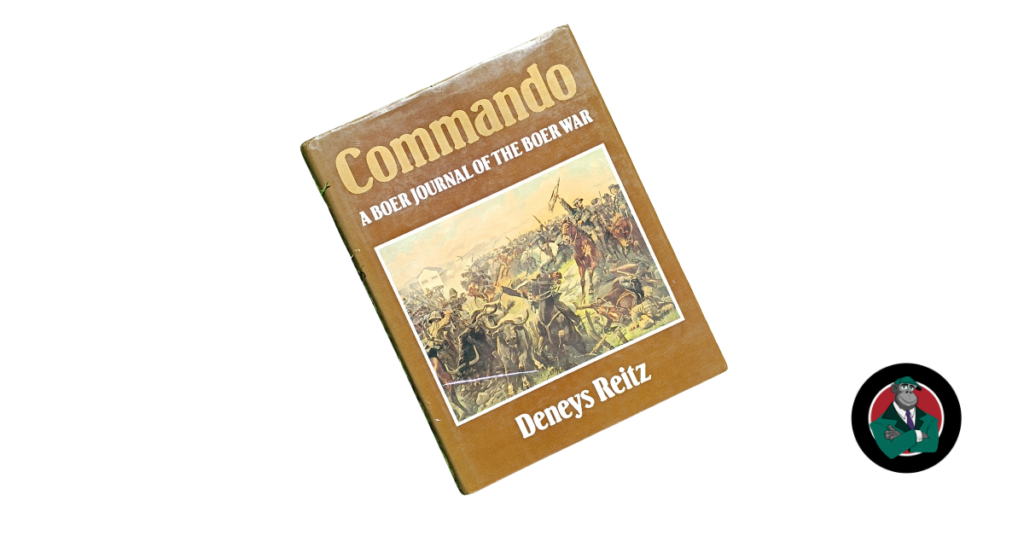
Commando by Deneys Reitz is a remarkable book. The copy I have was a reprint that included many photos, paintings and illustrations that help to show the world of war that the tale encompasses. The story begins with a young Afrikaner taking a trip with his family to Europe. To Amsterdam where his heritage lay along the Herengracht. To Scotland where the seeds of his education lay. To England and other places that were not so common for a kid of that time and age to have seen. These experiences led to the creation of a different sort of human creature.
After this brief introduction to his past the book moves into the meat of the narrative: one person’s experience of what was to become known as The Anglo-Boer War. England/Britain being the victors they always place their name first. The more modern label is The Second Boer War. A boer is a farmer in simple language but in South Africa it is also more than that. This is the case because of historical events like the Boer Wars. It was not Britain against a few farmers (although it was that too). But it was Britain against republican countries who were administered by Afrikaners.
In South African history there is plenty of racial strife and these boer wars are part of that. White people have always been able to draw the most distinct lines between people based on their differences. But this book is not really about that. It’s about the story of a teenager who joins a war that most would say could never be won. It’s the story of how that boy experiences some of the most amazing and bloody adventures. It is the story of one lucky bastard.
It takes the reader along a historic path across South Africa as skillful horsemen who are also riflemen of the highest calibre, having been raised to learn how to shoot and ride from a young age, take on the might of the biggest empire earth has ever known. Their lot is practically a lost one from the start but the bitter determination to continue the fight led to some extraordinary circumstances. The implementation of scorched earth tactics, blockhouses and concentration camps being some of the most notable of these circumstantial realities.
The book offers an insight into the crucible that forged the culture of the ‘boer’. As Reitz crosses paths with famous historical characters like Paul Kruger, Winston Churchill, Jan Smuts and Kitchener the reader is taken from the vast space of the South African landscape into the history books. Commando is one of those books. It illustrates how vital to a boer commando horses were and the dear relationship a rider has with his mount. It shows just how desperate and dire their situation was and how determined they were to carry on. It shows the divisions that etched themselves into the cultural milieu of the country which would become more stark in the following century. It shows the reader a world that reflects the world in clear and unambiguous prose.
There is the saying that you should not judge someone until you have walked a mile in their shoes (because then you can judge them and you’ll be a mile away and they’ll have no shoes). If you want to know what it was like to walk in the shoes of a young boer soldier during this war, Commando is probably the best book to read.

