
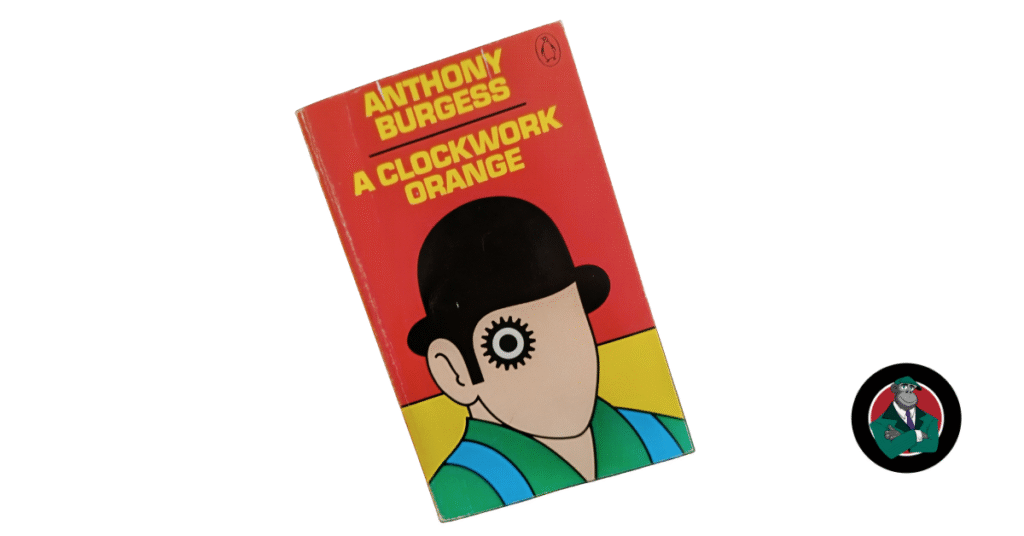
I first watched the film A Clockwork Orange back when I was in film school. Kubrick’s motion picture vision having had a major impact on the generation above my own and the medium itself. But it wasn’t until about 20 years later that I picked up the book. It’s not a long book, coming in at just under 150 pages and it fits into the pocket of your pants as easy as it worms its way into the pockets of your mind.
It was always touted for its depictions of ultra-violence and a dystopian future where young men roamed the streets and bars of the world looking for destruction – of others and self. I often find when I have a heaviness of mind that the heavier pieces of human culture do better at bringing in the light than those light-hearted ones. Give me a juvenile delinquent carrying out horrendous crimes, literally brainwashed by a corrupt and unethical system, thrown into the world to reap the grapes of wrath waiting for him, caused by his actions. Attempting suicide but not getting off that easy. Achieving a kind of mental freedom along the way to once again becoming a juvenile delinquent. Before finally finishing off by actually finding joy in dreaming of the simple acts of marrying a partner and having a child.
That’s the kind of story I want to read when I’m in the doldrums of my own mind. Driven there by the structures of the human world that very much encourage unhealth. That’s the kind of story that helps bring me back into a stream of consciousness that doesn’t crave oblivion. And as much as it is entertainment it also strikes some interesting lines in terms of analysing human society.
One of the clearest and most memorable themes of the book is the language the youth of this future speaks (called Nadsat). Apparently Anthony Burgess was a linguist and used this knowledge to create a lexicon for his characters to wield along the way. It may be a bit confusing in the beginning but I found that the rhythms were soon easily picked up and the understanding of each word simple enough to grasp. But for the first few pages you may feel somewhat baffled when the kids are talking all real horrorshow bogged down, gulliver spinning in the glazzies, lost in the chelloveck-speak.
The tone and cadence of the conversation in this fictional register allude to the author’s abilities as a music composer. The protagonist’s love for the classical giants (Mozart, Beethoven, Bach, etc.) also highlight this connection. It’s a little more well thought out and possibly easier on the mind than the kind of Gen Z slang that we’re seeing in present times, epitomised by the words brainrot and skibidi.
It’s interesting to note that in this future we’re living in (although not all too dystopian, but not far from it) the youth have come up with their own kind of register. However, they’re not particularly running around committing acts of horrible violence on unsuspecting victims. And I believe that every generation has corrupted their home language for their own use, to find their own meaning in life, to make their own meaning of life. And every older generation has rolled their eyes in disdain with these linguistic changes. I’m sure the baby boomers heard the language of Gen X and felt similarly to the way Gen X hears the language of Gen Z. Millennials in the middle seemingly not giving much of a shit as the dreams they were promised became the nightmares of reality.
Anyway, the kids aren’t killing and raping in little gangs of decked out malcontents for the most part. We’re not living in a world that Burgess envisioned. But it’s worthwhile to visit it through the book to be reminded of how horrible things could be, but aren’t.

