
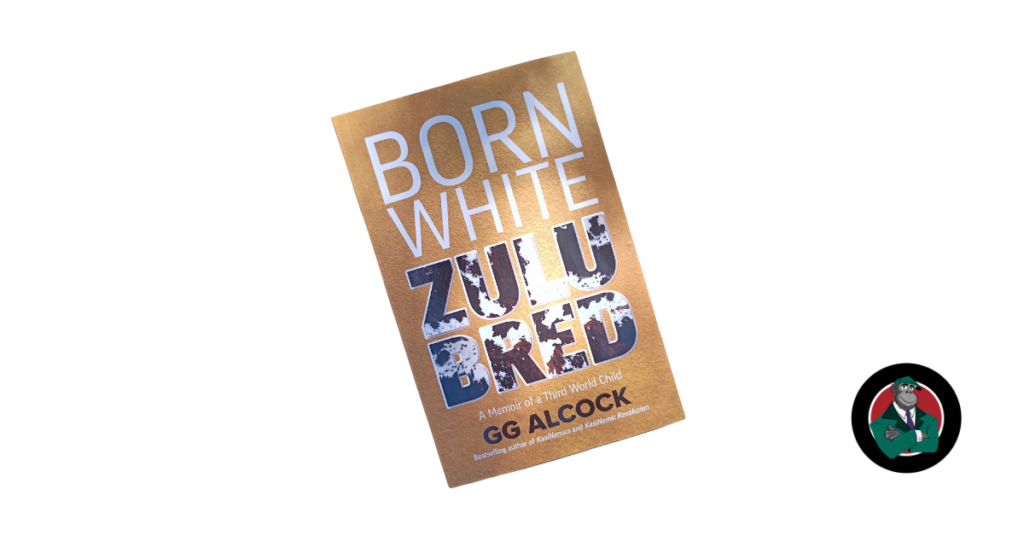
I went to an event recently where GG Alcock was speaking. He had some incredible insight into the informal economy in South Africa. He attributed this to his upbringing. Crystalised in his father’s promise that was given when GG asked if he could attend university: “We can’t afford to send you to university but I will make sure you are prepared for a life in Africa.” He’s a successful human adult now with an incredible story that is captured in the book Born White Zulu Bred.
There can be no doubt that his unique upbringing, as a white kid in rural KwaZulu-Natal, impacted the paths his life took. From being fluent in languages the millions of other white people in South Africa didn’t bother to learn, to having fond familiarity with the practices of rural Zulu culture and the perspective of The Other in a country where his skin was literally legalised privilege. These things make him a most interesting case for human study.
The book is not a difficult read in terms of the language and vocabulary but there are anecdotes and tales that can make the more sensitive reader squirm with discomfort. The stories of dispatching rabid dogs and witnessing a riverside police autopsy were particularly harrowing. As he grew older and gravitated to that great black hole of Johannesburg, The Walls That Thunder, he found work in what would be, for many people that looked like him, strange places. The hostels of Joburg being notoriously dangerous for anyone but a Zulu man.
But as serious as the tales are and the context in which they occur, GG tells them with a kind of light-heartedness that recognises the inherent insecurity in existence and welcomes it as a friend rather than defending against it. This attitude could possibly be attributed to aspects of the Zulu culture that he was exposed to. Undeniably steeped in a rich history of vicious warfare. When death is rudimentary the more banal aspects of life can seem much more of a game. Like business.
GG Alcock has an incredibly original story. One that could only occur in this country called South Africa. It could only have been shaped and moulded by the times and places that he had found himself in. The institutions of society were for him a stark contrast to most and that means that there is value in his unique perspective being given voice and shared widely. A reminder of the incredible strength in diversity when understanding can be reached.
That little tribe of Alcocks from Msinga seem like they were a special bunch. Each of them carving a life that left indelible marks across the lives of many others in many places. I look forward to getting my hands on a copy of his other books: KasiNomics and KasiNomic Revolution.

