“Thou mayest.”
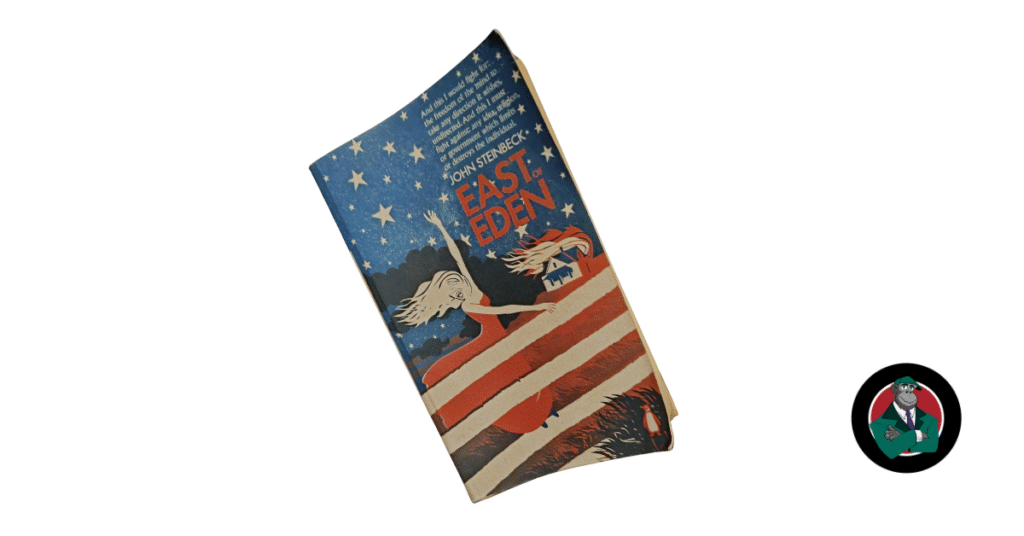
Some books find you at the exact right moment, when you’re raw, uncertain, searching for something solid to hold onto. East of Eden found me there.
At first glance, it’s a sweeping family saga set in California’s Salinas Valley. It spans generations, follows two families, and wrestles with betrayal, jealousy, and fractured love. But it’s not just a story of place or plot. This novel digs far deeper. It’s a meditation on human nature, on the age-old tug-of-war between good and evil, between who we are and who we could become. And how our own choices shape that path.
Steinbeck doesn’t offer simple answers. The characters he gives us are flawed, complex, and heartbreakingly human. They make terrible choices, carry inherited wounds, love badly, and sometimes, despite everything, find moments of redemption. There’s cruelty here, yes. But also kindness. There’s fear and shame, but also grace. You can’t pin these people down as heroes or villains. They contain both. Like we all do.
The novel circles around one central idea: are we bound by our pasts? By our parents? By our impulses? Or is there something within us that allows for change? Over and over again, Steinbeck leads us back to this question. And then, in one quiet word, he gives us an answer.
Timshel.
“Thou mayest.” That word hit me like a soft but seismic shift. The idea that we may choose our own destinies, that we are not doomed by history or blood or even our worst mistakes, felt both radical and deeply comforting. You may choose goodness. You may choose a new path. You may rise.
That’s what makes East of Eden linger. Yes, it’s heavy with tragedy, betrayals echo through generations, silence becomes a form of violence, and loneliness wraps around people like a second skin. But the novel never succumbs to despair. It insists on the possibility of transformation. It reminds us, over and over, that the story isn’t finished. Not unless we let it be.
Reading this book while my own life felt like it was unraveling was both painful and oddly healing. It didn’t offer cheap comfort or easy solutions. But it offered something better: the belief that even in grief, even in confusion, we still hold the power to choose how we respond.
This novel is long. It takes its time. There are moments where it meanders or weighs you down. But if you stay with it, if you let it do its quiet work, it might just change how you see yourself, and the people who’ve shaped you. It might even help you believe, again, in the slow, stubborn power of hope.

