
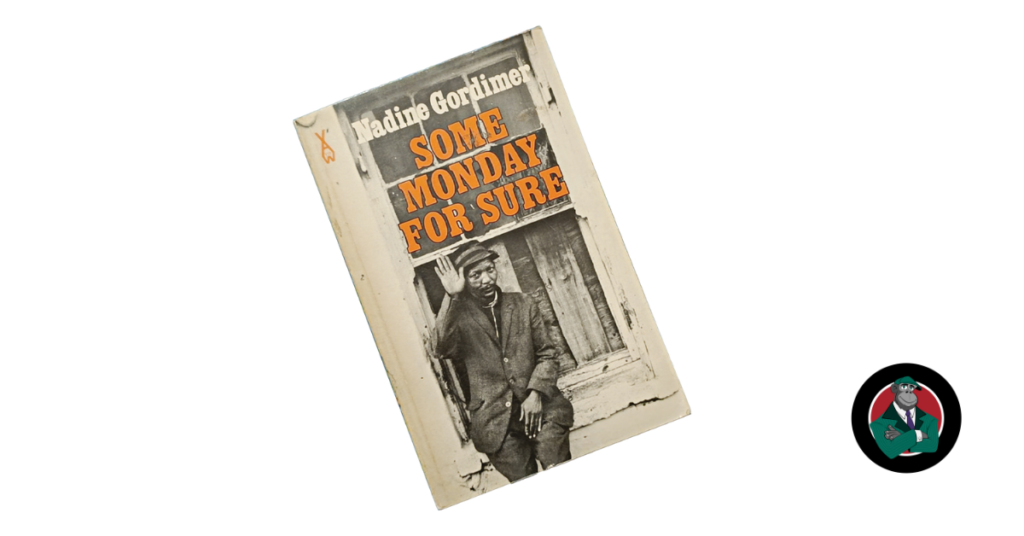
Nadine Gordimer is quite well known in South Africa. I think anyone who wins a Nobel Prize becomes pretty famous in their home country. It feels like the rest of the world has recognised the best of us. I personally see the accolade as a recommendation: if you want to read something good, read this.
Some Monday for Sure is the first time I have sampled her writing. I’ve always been partial to short stories and this little anthology doesn’t disappoint. Seeing as the context for her craft occurred during the Apartheid era, it’s not surprising that her art reflected the aspects of life that were elevated beyond the ordinary because of the oppressive regime. Each of the stories somehow highlights the effect of the colour bar on interpersonal relations between folks of different hues and heritages during those years.
In the introduction she notes that these stories ‘reflect the attitudes of various kinds of whites towards blacks in South Africa, and sometimes the attitudes of blacks toward whites, and various relationships between black and white, but rarely my own attitudes, for the simple reason that these would too often represent the exception and not the rule’. The pressure that authoritarian governments put on the clear minded among the population of a country often creates the context for great art.
The stories in Some Monday for Sure are simple but powerful. The story chosen for the title is particularly tense and stressful, but still somehow containing that hope which Freedom can inspire. They take place in circumstances that many folks might consider mundane and ordinary but within the wider social context of Apartheid these become extraordinary circumstances. A party with friends becomes a crime against the state. A steady, unskilled job becomes the position for a sabotage operative. People are put in positions where they create a reflection of the world as it was at that time and in that place. In other times and other places the meaning of their actions, thoughts and beings would not likely mean as much.
The settings within Johannesburg created a sense of nostalgia in my mind. They were accurate to the degree that I felt I had been in that shop, been in that apartment, visited that house. All of the stories regardless of the specific geographical setting are imbued with the narrative lifeblood of South Africana. Gordimer’s work probably forms part of the cultural foundation of the literary arts in South Africa set by writers like Olive Schreiner.
Although the characters in Gordimer’s stories may not reflect her attitudes, her ability to subsume their shoes means that she delivers a description that makes their attitudes clear as day. So many South Africans will be able to read these stories and feel these differences. The writing is good enough that even humans from other countries should be able to feel it too. But there will also be the ignorant who won’t have a clue. Not that they’re likely to pick up a book, let alone read one. But if they did, they would be likely to miss all of the nuance that makes these stories so powerful to begin with.
I enjoy short stories. You can read books that contain them in piecemeal sittings while still getting the satisfaction of an entire (if short) story experience. I see why Nadine Gordimer won the Nobel Prize.

