
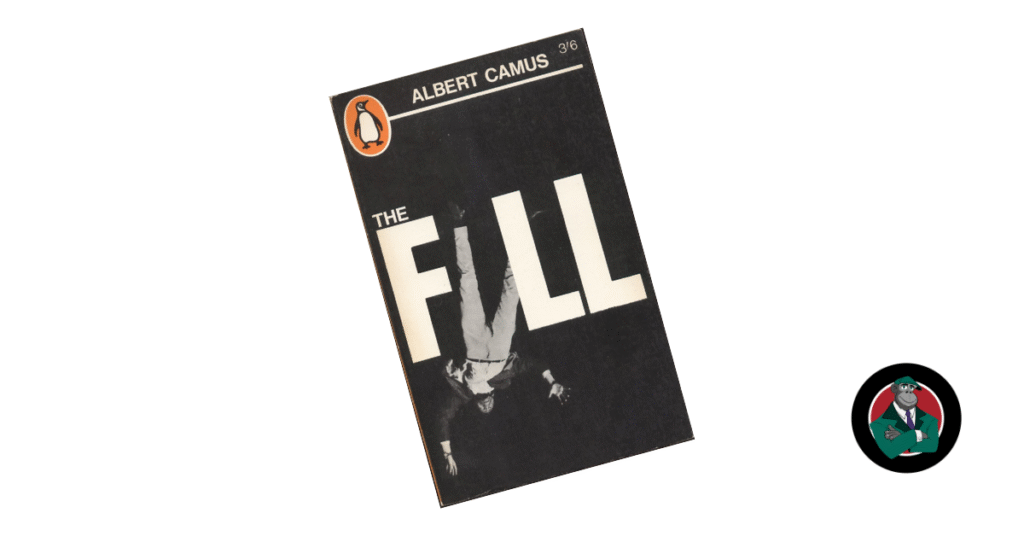
The Fall begins in what was always one of my favourite cities whenever I set foot in it: Amsterdam. Specifically in a bar called Mexico City. It’s written as if you’re a character in the book itself, the person that the narrator is talking to. Regaling you with stories about his life, the cities he’s spent time in, which I have been fortunate enough to spend some time in myself, like Paris.
The tone of the book is interesting when you find yourself feeling wistful for times past with past loves. All the mention of crossing bridges over the river Seine, and hearing splashes that may signal death and despair hit me right in my heart. But it wasn’t a punch of pure pain, but rather the searing healing of a surgeon’s scalpel.
The book is not long but the conversations in it felt quite mesmerizing to my mind. The discussions that move from the political to the philosophical and the everyday social made me feel in touch with a world that I walked in years ago. While still giving me a sense of hope for the world that awaits me in the future. For the footsteps I have yet to take in the cities I am yet to see. With the people I am yet to meet.
The tableau of talking to a stranger at a European bar is one I am quite familiar with and it fills me with a sense of excitement to engage a stranger in meaningful conversation. That’s part of the brilliance of The Fall, it doesn’t just read like a novel, it feels like an encounter. You aren’t just reading about Clamence, the narrator; you’re seated across from him, drink in hand, listening to him talk as he unravels.
Sometimes I found myself quietly agreeing with him. Sometimes I felt the sharp sting of being implicated in what he was saying. That’s the other genius stroke of Camus in this book, he uses the second-person narrative not just as a stylistic choice, but as a form of confession. One that is somewhat uncomfortably shared. As Clamence exposes his hypocrisy, his ego, his false humility, he invites you to do the same. Or more accurately, he implicates you in his unraveling. And even if you resist, some part of you will recognise the self in the shadows of what he says.
The themes may be heavy to some readers (judgment, guilt, justice, ego, false virtue) and yet the prose floats. It’s lucid without being overly ornate, and poetic without getting lost in the clouds. It reads like a conversation you can’t look away from. Like a mirror you don’t want to stare into but can’t help glancing at. There’s an eerie familiarity to Clamence’s worldview—because so much of it resembles the world we live in. A world where people perform virtue, craft identities, and parade their empathy.
And yet, his worldview is not entirely nihilistic. It doesn’t offer easy redemption, but it does offer clarity. Clamence isn’t looking to be forgiven. He’s looking to make sure you know that you, too, have something to confess. In that way, The Fall becomes a kind of secular sermon. Not from the pulpit, but from the corner of a smoky bar in Amsterdam. A place I’ve always felt quite comfortable myself.
Reading it left me both disturbed, like the mud at the bottom of a river after someone has crossed through the water, and weirdly comforted. Disturbed by how much of myself I saw in the pages. Comforted that this self-exposure is part of the human condition. That to admit our contradictions isn’t weakness, it’s a step toward honesty.
It’s a short novel, but it lingers. And for anyone who’s ever sat at a bar and opened up too much to a stranger, or listened to someone else do the same, it will feel eerily familiar. As if you’ve had this conversation before. Or perhaps you’re due to have it soon. Even if it’s only with yourself.

