In early 2024 I found myself in Gqberha (formerly Port Elizabeth – not named after the English queen). At the time the Logos Hope, a ship that travels the world with a stack of books aboard (they call it the largest floating book fair on their website), was in the harbour. We took a morning to go investigate since I and my fellow travellers could quite accurately be construed as bibliophiles.
Once on board I noticed that the selection leaned heavily toward education and Christianity. Neither of which particularly piqued my interest, but I can appreciate their value in many parts of the world where the ship may stop. Particularly the poorer parts of the world. But I’m solidly within the middle class so I was looking more for some entertainment in the form of classics that have stood the test of time or have some significant history.
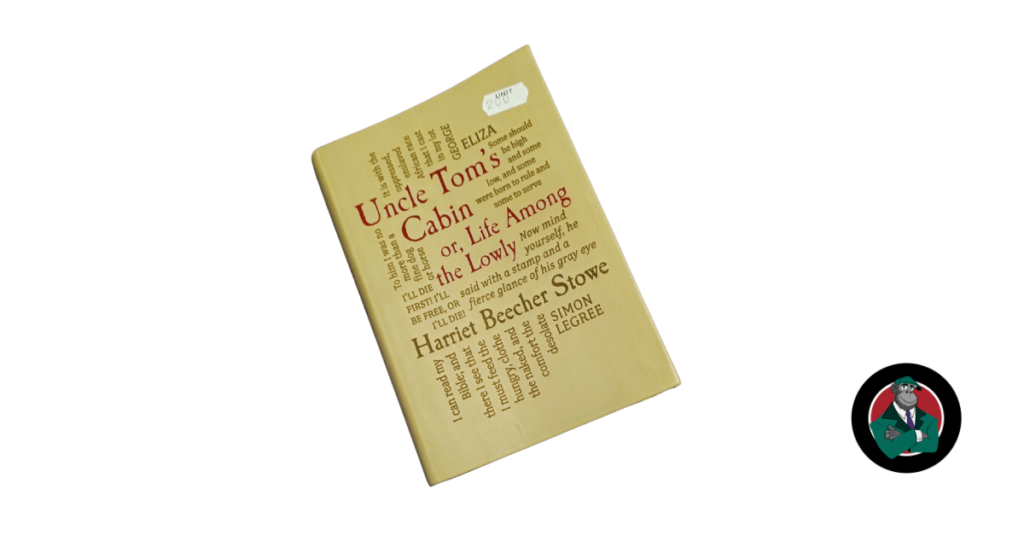
Which is why I opted to buy Harriet Beecher Stowe’s Uncle Tom’s Cabin. Although the title has been corrupted over the last 150 years and more to represent meanings that aren’t particularly accurate of the character or the intent of the author, I somehow knew this to be an important book. I refer primarily to the insult that can be hurled at a black man who other black people perceive to be subservient to white people. Calling him an “Uncle Tom”.
It helped that the book had an interesting cover and binding. Not just cardboard like many others but a mix of media that made it more visceral to touch and look at. The words on the cover being embossed meant that they can be felt as much as they could be read. For this experience I was convinced to buy the book, but it took me a few more months before I finally read it.
There were no reasons that particularly stopped me from reading the book, other than I was already reading others. But when I finally picked it up I must admit that I wasn’t disappointed. Having read other books about slavery (like 12 Years a Slave) and being educated in the history of this horrific trade (by studying the history of economic thought) I knew the setting for much of the action. I had read about characters who matched much of what had been written in Uncle Tom’s Cabin.
Stowe’s writing made the scenes quite real with her descriptions and was able to imbue the feelings that a humanist would endure while hearing the stories of these characters. Of course it is not all doom and gloom. The book begins with quite an exciting chase sequence that I was wont to hear more of by the time we were done. But the primary focus is on the title character as he moves from a fairly comfortable existence into good luck and bad until he meets the final end that slavery produces: drudgery and death.
The style of writing is what you would expect from something of the mid-19th century but it is quite easy to follow. The story is iconic for many reasons and after reading it I think many of those reasons are justified. I can imagine the stir a book like this could have caused at the time.
After doing some simple research I found that the book was seemingly a sort of catalyst for the American Civil War, which raged because some people wanted to keep their slaves while others, including a few labour unions, objected to slavery – for various reasons. Harriet Beecher Stowe appeals to Christian morality and uses Christianity as a yardstick for morality. Although this can be ethically dubious (for what horrors has the church reigned over the planet in the past?), in this case it doesn’t seem philosophically inaccurate or insincere.
I think more American citizens of the United States should perhaps be reading this book. I don’t think it would hurt and even an atheist should be able to appreciate the value that it brings and brought to the conversations around slavery and its everlasting impact. It could revive an opportunity to address the questions of reparation and repatriation. I won’t be holding my breath though.
If you get the opportunity to read Harriet Beecher Stowe’s book Uncle Tom’s Cabin, I’d recommend you not to pass it up. As such an old piece of media I found that there are quite a few filmic adaptations of the story but the one I will be looking out for will be the 1987 version with Samuel L Jackson.

